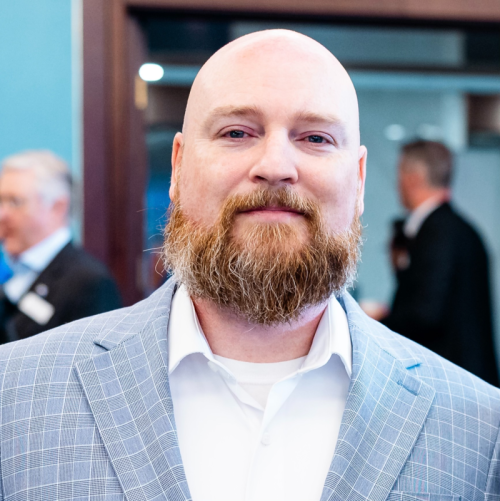
Ahead of VISCO’s participation at the Digital Oil & Gas Summit USA 2026, we caught up with Harald Sundalshleiv, Chief Sales Officer at VISCO, to hear his thoughts on the industry’s biggest challenges, emerging opportunities, and what attendees can expect from the company at the event.
Tell us about your company and your experience in the industry?
VISCO is a Norwegian Technology company specializing in Digital Twins, Operational Workbenches, and industrial visualization solutions for complex asset-intensive industries. For more than two decades, we have worked alongside leading operators, EPCs, and service providers to help improve the way industrial work is understood, coordinated, and executed.
Today, our focus is helping energy companies move beyond data visibility and toward operational understanding, connecting people, processes, systems, and assets into a unified operational workspace that improves performance, collaboration, and decision-making.
How is your organisation responding to digital transformation in the oil and gas industry?
We believe the industry is moving from a focus on digitizing assets to digitizing work. While Digital Twins have delivered significant value in asset visibility, the next step is enabling operational teams to execute work more effectively.
VISCO is responding by providing a Digital Workbench that connects engineering information, operational data, maintenance systems, and workflows into a single operational environment where work can be planned, coordinated, and continuously improved.
What outcomes do you hope to achieve in your participation at Digital Oil and Gas Strategies Summit this year?)
We look forward to engaging with industry leaders who are actively transforming operations through digitalization, automation, and AI.
For VISCO, the summit is an opportunity to share practical experiences, discuss the evolution from Digital Twins to Operational Workbenches, and collaborate with operators seeking measurable operational outcomes rather than simply deploying new technologies.
What excites you about the topics to be explored at the summit?
The industry is entering a pivotal phase where AI, automation, and operational intelligence are becoming practical realities rather than future concepts.
What excites us most is the discussion around how organizations can create trusted operational foundations that make these technologies scalable, governable, and capable of delivering real business value.
What do you see as the biggest challenges affecting the industry over the next 12-months?
The biggest challenge is not a lack of technology. It is the ability to turn fragmented data, disconnected workflows, and isolated systems into actionable operational understanding. Organizations must balance cost pressures, workforce transitions, energy security, and digital transformation while ensuring technology investments generate measurable outcomes for operations.
What surprises you most about digital transformation in the industry?
Many organizations have successfully digitized large amounts of information, yet operational teams still spend significant time searching for context, coordinating activities, and navigating multiple systems. This is a never ending story….
The technology challenge is increasingly solved. The operational adoption challenge remains where most of the unrealized value exists.
How do you see digitalization and automation improving the sector?
Digitalization and automation enable organizations to make better decisions faster, reduce non-productive work, and improve operational consistency.
The real opportunity lies in combining human expertise with intelligent systems that can provide context, guide workflows, automate repetitive activities, and help teams focus on higher-value work.
Can you think of examples within your own projects of how automation / digitalization has improved the sector?
One recurring example is the ability to bring engineering data, maintenance information, visual asset context, and operational workflows into a single work environment. This is what we provide globally to ConocoPhillips.
This reduces time spent searching for information, improves collaboration between disciplines, and enables operational teams to focus on execution rather than coordination. The result is more efficient inspections, maintenance planning, modifications, and brownfield work execution
Biggest opportunities for the oil and gas industry in the coming years?
Companies have been talking about this for years. The biggest opportunity is operational intelligence.
Organizations that successfully combine Digital Twins, enterprise systems, automation, and AI into a coherent operational environment will achieve substantial improvements in productivity, safety, knowledge retention, and asset performance.
The future competitive advantage will increasingly come from how effectively organizations understand and execute work.
What are the biggest challenges relating to planning, designing and implementing your digital and automation strategies?
Success is rarely limited by technology. It is usually limited by organizational alignment, adoption, governance, and the ability to connect initiatives to business outcomes. The most successful strategies focus on operational users first, creating solutions that fit naturally into daily work rather than introducing additional complexity and just another tehnology.
What did you learn from project experiences that might help industry colleagues going forward?
Start with operational outcomes, not technology.
Focus on the work that people perform every day, identify where friction exists, and build solutions that make that work easier, safer, and more effective.
Organizations that prioritize user adoption, operational value, and continuous improvement consistently generate stronger returns on their digital investments than those focused solely on technology deployment.
What advice would you give someone who is just entering the industry and what, would you say, are your biggest career learnings?
My advice would be to spend as much time as possible understanding how operations/i.e Oil and gas companies actually work in the field. Technology is important, but the most valuable professionals are those who can connect technology with real operational challenges and business outcomes.
The biggest lesson from my career is that successful transformation is ultimately about people, not technology. The best projects are not necessarily those with the most advanced systems, but those that help individuals make better decisions, collaborate more effectively, and execute work more efficiently.
Technology creates value only when it fits naturally into how people work. This aligns closely with VISCO’s view that organizations must first understand work before they can optimize, automate, or apply AI to it.
Why should industry colleagues come to the Digital oil and Gas Summit in 2026?
The industry is facing a unique period of change. Digitalization, automation, AI, workforce transitions, and operational efficiency are no longer future topics; they are business priorities today.
The Digital Oil and Gas Summit brings together industry leaders who are not just discussing transformation, but actively implementing it. It provides a valuable opportunity to learn from real-world experiences, share practical lessons, challenge assumptions, and explore how emerging technologies can deliver measurable operational value.
For anyone involved in industrial operations, digital transformation, asset performance, or AI adoption, it is an excellent forum to gain insights, build relationships, and better understand where the industry is heading next. As the industry evolves from simply making assets visible toward understanding and improving work itself, these conversations become increasingly important.
What is your top tip when attending summits and conferences?
Make sure you meet people which can tell you something and learn you something you have not heard before…..