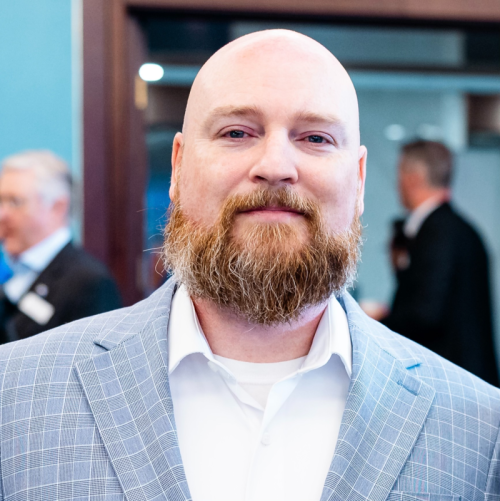
Ahead of VISCO’s participation at the Digital Oil & Gas Summit USA 2026, we caught up with Peter Baxter, Vice President of Operations at VISCO, to hear his thoughts on the industry’s biggest challenges, emerging opportunities, and what attendees can expect from the company at the event.
Tell us about your company and your experience in the industry?
I am Peter Baxter, Vice President of Operations at VISCO. We work at the intersection of industrial operations, digitalization and commercial transformation, helping operators turn complex technology into practical operational value. VISCO develops spatial operational workbenches for asset-intensive industries. Our focus is to help organizations plan, coordinate, execute and continuously improve work by bringing spatial context, enterprise information, workflows and operational knowledge into one connected working environment.
How is your organisation responding to digital transformation in the oil and gas industry?
VISCO is responding by moving the conversation beyond digitizing information and visualizing assets. Industry has invested successfully in systems of record and spatial digital twins, but work still happens between those systems. Our approach is to provide a System of Work: an operational workbench that organizes governed information around the task, location, role and stage of execution. We are also transitioning VCOG toward a standardized SaaS model so customers can adopt shared workflows, improve continuously and scale across assets without creating fragmented, customer-specific environments.
What outcomes do you hope to achieve in your participation at Digital Oil and Gas Strategies Summit this year?)
We want to exchange practical experience with operators, partners and industry leaders who are moving from digital pilots toward repeatable operational value. Our goal is to deepen the discussion around Operational Understanding: how companies can make work visible, contextual and connected across planning, familiarization, field execution and learning. We also hope to identify shared industry challenges where standardized workflows, customer collaboration and joint industry development can accelerate progress.
What excites you about the topics to be explored at the summit?
What excites me most is the shift from technology-led discussion to execution-led discussion. AI, digital twins, automation and data integration matter, but their value depends on whether they help people perform work more safely, efficiently and consistently. The most interesting question is no longer simply what information we can display. It is whether our digital environments understand the work well enough to guide decisions, anticipate constraints and preserve operational learning.
What do you see as the biggest challenges affecting the industry over the next 12-months?
The immediate challenge is increasing operational complexity combined with pressure to improve productivity and do more with constrained resources. Brownfield assets, life extension, fragmented information, multiple suppliers and the retirement of experienced personnel make execution harder. At the same time, organizations face pressure to adopt AI quickly. The risk is applying intelligence to fragmented workflows before the operational context, governance and accountability are in place.
What surprises you most about digital transformation in the industry?
The biggest surprise is that the industry often has more information than people can effectively use. The issue is rarely that the data does not exist. The issue is that planners, technicians and inspectors still spend significant effort finding, validating and assembling information across separate systems. Digital access has improved, but access alone does not create Operational Understanding. Connecting information does not automatically connect work.
How do you see digitalization and automation improving the sector?
Digitalization can reduce operational friction by bringing the right context to the person performing the work, before and during execution. It can improve familiarization, coordination, field productivity, knowledge retention and learning. Automation becomes valuable when it is built on structured work context. In that setting, intelligent systems can identify conflicts, surface missing prerequisites, recommend next actions and support governed workflows while keeping authority, traceability and human accountability explicit.
Can you think of examples within your own projects of how automation / digitalization has improved the sector?
Across the types of operational environments we support, digitalization enables personnel to “walk the job” virtually before entering the field, review access routes and surrounding conditions, bring drawings and work information into the physical context, and capture findings directly within the workflow. This creates continuity from planning and familiarization through field execution and evaluation. The practical value comes from reducing information search, unnecessary travel and repeated reconstruction of context, while improving preparedness and situational awareness.
Biggest opportunities for the oil and gas industry in the coming years?
The largest opportunity is to create more value from existing assets through better brownfield execution, maintenance, inspection, turnarounds, life extension and operational readiness. A second opportunity is to turn daily execution into organizational memory, so every completed activity improves the next one. A third is to use AI as operational intelligence, grounded in work, space, time, dependencies, history and risk, rather than as a standalone chat interface or an additional layer of disconnected technology.
What are the biggest challenges relating to planning, designing and implementing your digital and automation strategies?
The first challenge is starting with technology rather than the operational problem. The second is fragmented ownership across functions, systems and suppliers. The third is attempting to replace trusted systems of record instead of building an operational layer that works with them. Other challenges include data quality, adoption, governance, excessive customization and unclear value measures. A successful strategy should begin with a defined workflow, establish the required context, preserve authoritative sources, and measure whether execution actually improves.
What did you learn from project experiences that might help industry colleagues going forward?
One key lesson is that usability is strategic. If a system creates friction, people will work around it. Another is that large transformation programs should not be the default starting point. Organizations can begin with a specific workflow and a visible operational problem, prove value, learn and expand. We have also learned that standardization and flexibility must be balanced: common workflows should be reusable, while configuration and interoperability should accommodate different assets and enterprise architectures.
What advice would you give someone who is just entering the industry and what, would you say, are your biggest career learnings?
Our advice is to learn how work is actually performed, not only how it is described in systems and procedures. Spend time with operators, planners, inspectors, technicians and contractors. Understand the physical environment, the handoffs and the reasons behind decisions. My biggest career learning is that technology earns credibility through operational outcomes. Listen carefully, avoid unnecessary complexity, and connect every digital initiative to a real improvement in safety, execution, productivity or learning.
Why should industry colleagues come to the Digital oil and Gas Summit in 2026?
The summit creates an opportunity to compare real experiences across operators, technology providers and partners at a time when the industry is moving from digitization toward intelligent operations. The value is not only hearing what is possible, but understanding what is working, what remains difficult and how companies can collaborate around shared challenges. It is a useful forum for turning broad digital ambitions into practical operational priorities.
What is your top tip when attending summits and conferences?
Arrive with two or three operational questions you genuinely want help answering. Use those questions to guide the sessions you attend and the people you meet. The best outcome is not collecting the most presentations or contacts. It is leaving with a sharper understanding of a problem, a small number of relevant relationships and one or two actions you can carry forward.