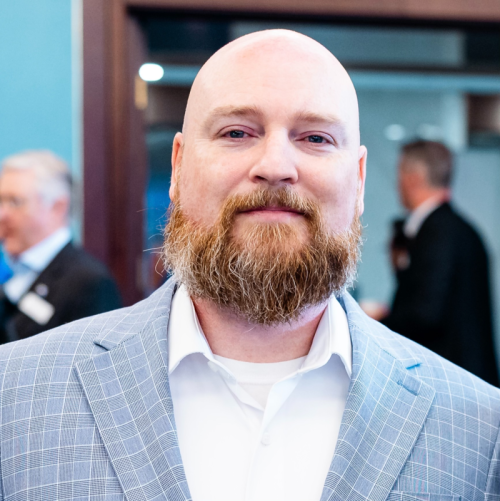

Ahead of Aloxy’s participation at the Digital Oil & Gas Summit USA 2026, we caught up with Michael Mayer, Managing Director at Aloxy, to hear his thoughts on the industry’s biggest challenges, emerging opportunities, and what attendees can expect from the company at the event.
Watch the Video Interview here:
Read the text version of the interview here:
Tell us about yourself, your company and your experience in the industry? Who are Aloxy and what space do they operates in, what industries do they serve.
I’m Michael Mayer, Managing Director for North America at Aloxy.
My background combines both engineering and commercial leadership. I hold a degree in Chemical Engineering, and throughout my career I’ve worked at the intersection of industrial operations, automation, and digital transformation. Before joining Aloxy, I held leadership positions in industrial automation and digital solutions, partnering with global operators across the energy, chemical, and process industries to solve complex operational challenges. That experience has given me a deep appreciation for the realities of running industrial facilities safely, reliably, and efficiently.
Today, I lead the expansion of Aloxy’s Industrial IoT solutions across North America. What attracted me to Aloxy is that we address one of the most practical and longstanding challenges in our industry: the visibility gap between the digital control room and the physical plant.
Over the past two decades, our industry has made tremendous investments in automation and digitalization. We can monitor pressures, temperatures, flows, and countless process variables in real time. Yet many critical field assets remain invisible to digital systems. Manual valves are a perfect example. They are involved in product movements, equipment isolation, maintenance activities, and safety-critical operations, yet their status is often verified through field checks, radio communication, or manual procedures.
At Aloxy, we’re changing that reality. Our wireless valve monitoring technology brings manual valves into the digital world, providing real-time visibility of assets that have historically been offline. In doing so, we help operators improve operational reliability, strengthen safety, and increase efficiency without requiring major modifications to existing infrastructure.
Ultimately, our mission is simple: to close the gap between what happens in the field and what operators can see in real time in the control room. That’s where we believe the next wave of operational excellence will come from.
What surprises you most about digital transformation in the industry?
The biggest surprise is the paradox that still exists.
When you walk into a modern refinery, petrochemical complex, or terminal control room, you see an incredible amount of information available in real time. Operators can monitor pressures, temperatures, flows, tank levels, pumps, and control valves instantly.
Yet at the same time, some of the most critical operational decisions still depend on assets that remain completely invisible to the control room.
A plant may know the status of thousands of automated instruments, but still have no direct visibility into the position of manual valves that determine whether a transfer can proceed safely, whether product is routed correctly, or whether equipment has been isolated properly.
That disconnection surprises many executives when they fully recognize its scale.
What’s encouraging, however, is that we’re reaching a point where this is no longer just an operational challenge. It’s becoming a strategic opportunity. Companies increasingly recognize that digital transformation doesn’t end at the control system. The next phase is extending visibility into the physical field and creating a true digital representation of operational reality.
The organizations leading this transformation are not necessarily building new facilities. They’re making existing facilities smarter, safer, and more connected by bringing previously offline assets into the digital environment.
In many ways, the future of industrial digitalization is not only about adding new technology. It’s about eliminating operational blind spots that have existed for decades.
What do you see as the biggest challenges affecting the industry over the next 1-3 years?
I believe the industry is facing three interconnected challenges: reliability, efficiency, and workforce constraints.
Across oil & gas and chemicals, operators are under increasing pressure to maintain high levels of operational performance while controlling costs and managing aging infrastructure.
At the same time, many organizations face workforce challenges. Experienced personnel are retiring, while facilities must operate with leaner teams and fewer resources than in the past.
That fundamentally changes the equation.
Historically, many operational gaps could be managed through additional field checks, more procedures, or more people. Today, that’s becoming increasingly difficult and increasingly expensive.
As a result, companies must find ways to get more performance from existing assets and infrastructure rather than relying solely on major capital projects.
This is exactly where digitalization creates value.
Real-time operational visibility enables better decisions, faster response times, and more consistent execution without necessarily increasing manpower. The companies that succeed over the next few years will be those that effectively combine experienced people, proven operational practices, and digital technologies to improve decision-making across their facilities.
The goal isn’t replacing people.
The goal is giving people better information so they can operate more safely, reliably, and efficiently.
Can you think of examples within your own projects of how automation / digitalization has improved the sector?
A great example comes from our work with Dow’s site logistics.
The challenge they faced was not a lack of procedures. In fact, they already had robust operating procedures in place. The challenge was something many industrial facilities can relate to: obtaining real-time visibility at the exact moment operators need to make critical decisions.
In railcar loading operations, operators may interact with 15 to 20 manual valves per railcar. Multiply that across multiple loading operations per shift, and you can see how difficult it becomes to rely solely on manual verification and human memory. As Dow described it, this wasn’t a people problem. It was a visibility problem.
Following an incident investigation, the team recognized that operators simply did not have access to critical valve-position information when decisions were being made. The control room could see thousands of process variables, but not the position of many manual valves that directly influenced safe operations. So the solution was to bring those previously invisible assets into the digital environment.
Using Aloxy’s wireless valve-position monitoring technology, Dow transformed manual verification activities into automated operational workflows. Instead of asking, “Did someone check the valve?”, operators can now see the actual valve position in real time. The system confirms readiness before an operation is performed rather than relying on field verification alone.
What I find particularly compelling is how the project scaled. It started with a single load rack and approximately 50 monitored valves. Once the operational value became clear, the deployment expanded significantly. Today, there are roughly 700 Aloxy sensors installed across Dow sites.
But perhaps the most important outcome is not the number of sensors. It’s the operational impact. Dow reported that after implementation, the rail rack where the solution was deployed remained incident-free for the remainder of the year and continued incident-free into the following year.
For me, that’s what successful digitalization looks like. It’s not about installing technology. It’s about giving operators the information they need to make better decisions, reducing operational risk, and closing the gap between what’s happening in the field and what decision-makers can see in real time.
That’s where digital transformation starts creating measurable business value.
What did you learn from project experiences that might help industry colleagues going forward?
The most important lesson is to start with the operational problem, not the technology.
The most successful digital transformation projects we’ve seen begin with a clearly defined business challenge: reducing variability, improving reliability, increasing operational visibility, or eliminating a specific risk.
Too often organizations start by discussing platforms, sensors, AI, or analytics. Those technologies matter, but they’re only valuable when connected to a real operational outcome.
The second lesson is to think about scalability from day one.
In industrial environments, it’s relatively easy to demonstrate value in a pilot. The real challenge is determining whether the solution can scale across hundreds or thousands of assets without becoming operationally or financially burdensome.
That’s particularly important in brownfield facilities where existing infrastructure, operating practices, and budget realities must be considered.
Finally, remember that adoption is just as important as technology.
The best solutions fit naturally into existing workflows and help operators make better decisions without adding complexity to their day. When people trust the information and see immediate value, adoption follows naturally.
Digitalization succeeds when technology becomes part of the way work gets done, not when it becomes another system people have to manage.
Biggest opportunities for the oil and gas industry in the coming years?
I believe the biggest opportunity is closing the gap between the digital control room and what’s still invisible in the physical field.
The industry has invested heavily in automation and digitalization, yet many critical operational decisions still depend on information that is manually verified, delayed, or unavailable in real time. That’s where the next wave of value creation will come from.
Everyone is talking about AI today, and rightly so. But AI is only as useful as the data behind it. If field information is incomplete or unreliable, even the most advanced analytics will have limited value.
That’s why I believe the real opportunity starts with building a stronger data foundation. Operators need trusted, real-time information from the field before they can fully leverage AI, advanced analytics, or digital twins.
At Aloxy, we’re helping customers transform previously invisible manual valve operations into structured, validated data that can be integrated into control systems, dashboards, and future AI-driven workflows. What was once a field walk becomes a digital data point.
The companies that succeed over the coming years will be those that connect more of their physical operations to their digital environment. Because smarter industrial operations don’t start with AI. They start with data you can trust. And that’s exactly where some of the greatest opportunities for oil and gas lie today.
Why should industry colleagues come to the Digital Oil and Gas Summit in 2026?
Because no company can drive digital transformation alone.
One of the greatest strengths of the Digital Oil & Gas Summit is that it brings together the entire ecosystem: operators, technology providers, industry experts, and digital transformation leaders.
This collaboration is essential.
The industry has moved beyond the question of whether digitalization is important. The focus today is on how to make it work at scale and how to generate measurable business value.
Events like this allow leaders to learn from real implementations, understand lessons learned, compare approaches, and hear directly from operators who have successfully deployed new solutions.
Just as importantly, these conversations help the industry move from isolated pilot projects toward broader adoption.
Digitalization creates the greatest value when it becomes part of the industry’s operating model rather than a collection of individual initiatives.
For anyone responsible for safety, operational excellence, reliability, digital transformation, or business performance, the Summit provides a valuable opportunity to understand where the industry is heading and how to accelerate that journey within their own organization.
That’s why I believe this is one of the most important industry gatherings of the year.